Tire Pressure Monitoring Systems for Cars and Trucks
Compare five tire pressure monitoring systems for cars and trucks. Explore real time monitoring. Pressure alerts. Temperature tracking. And practical everyday use.

Tire Pressure Monitoring Systems usually earn their place after a driver gets surprised once. Maybe it happens on a Monday morning when the steering feels a little loose on the way to work. Maybe it happens on a Friday afternoon about an hour into a highway trip when the vehicle starts pulling toward one side. The tire was not flat at the start of the week. It was just a few pounds low. Then a cold morning dropped the pressure a little more. Then a long stretch of fast driving added heat and stress. By the time the problem became obvious it had been building for days.
That is how most pressure problems work. They rarely announce themselves. A slow leak from a nail or a worn valve can take weeks to matter. A cold front can lower pressure overnight across all four tires. A hot afternoon can raise it just as quickly. A driver who checks tires with a gauge once a month is doing the right thing. But a monthly check only shows the pressure at that moment. It cannot show what happened last Tuesday or what is happening at mile 200 of a long drive.
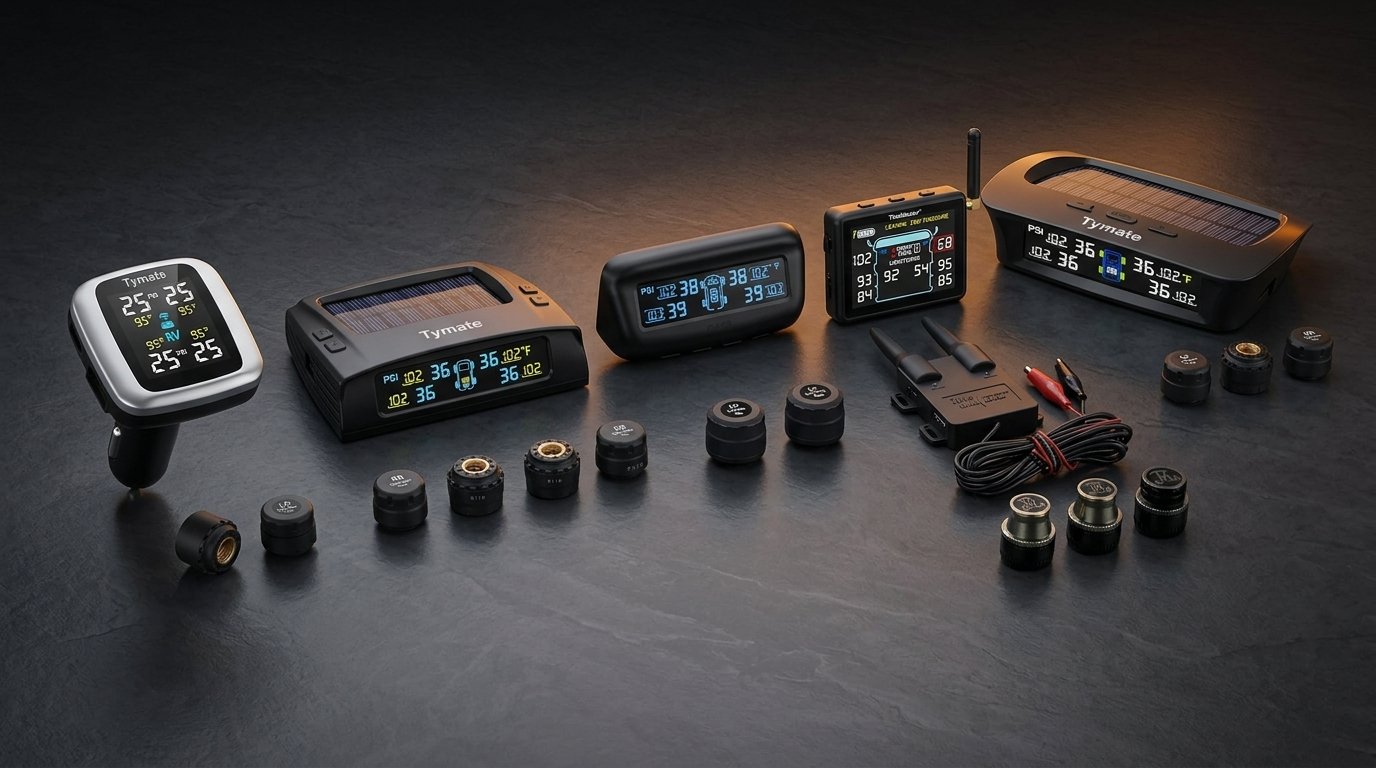
This is why some drivers want continuous monitoring. A tire pressure monitoring system places a small tire pressure sensor on each wheel and sends readings to a display inside the cabin. You can glance at pressure and temperature for every tire without pulling over or kneeling beside a wheel. Many factory systems only turn on a warning light and leave the driver guessing which tire needs attention. Real time tire pressure monitoring shows the actual numbers so you can spot a trend before it becomes a roadside problem.
The value grows with the kind of driving you do. A daily driver benefits from catching a slow leak before it ruins a tire. A highway driver spends hours at speed where low pressure and heat matter more. SUVs and trucks often carry people and gear on large tires that are easy to underestimate. Vehicles with heavy loads or a trailer put extra demand on every tire. Anyone planning a long road trip wants to know the tires are behaving well before the miles pile up.
A TPMS does not fix anything. It gives you information. Normal inspection and good maintenance still matter. The goal is simply to make that information easier to see. The systems below approach that goal in different ways. Some suit a simple everyday car. Others suit a truck with a trailer. The table shows how they differ at a glance.
Tire Pressure Monitoring Systems Comparison
| Product | System Type | Vehicle Use | Display | Key Strength | Best For |
|---|---|---|---|---|---|
| Tymate TM7 | Four external sensors with dash monitor | Sedans SUVs and trucks | Color LCD | Factory paired sensors and six alarm types | Daily drivers who want a simple setup |
| Tymate TM2 RV | Four external sensors with solar charged monitor | RVs trailers trucks and SUVs | Color LCD with auto backlight | Room to grow up to 10 tires | Drivers with a trailer or extra tires |
| Masoll M13 | Four external sensors with solar charged monitor | Sedans SUVs trucks and RVs | LCD with auto backlight | Auto calibration and auto sleep and wake | Everyday drivers who want low fuss |
| TireMinder i10 RV | Four transmitters with signal booster | RVs and towing setups | Color monitor | Monitors up to 20 tires and swaps between vehicles | Owners of larger rigs |
| Tymate TM3 RV | Four external sensors with repeater function | RVs trailers trucks and cars | Color display | Solar and USB charging with up to 10 tires | Truck owners who tow |
Our Take
Start with the vehicle and the number of tires. That one question narrows the field faster than any feature list. A single car or SUV with four tires does not need a system built for a long rig. A truck pulling a trailer does. The Tymate TM7 and the Masoll M13 are the most direct fit for the first group. Both are built around four sensors and a dash monitor. The Tymate TM2 and the Tymate TM3 also start with four sensors but can grow to ten tires. The TireMinder i10 sits at the far end of the range because it can monitor up to 20 tires.
Power is the next practical difference. The TM7 plugs into a power outlet in the vehicle. That is dependable if your outlet works and you do not mind a cable. The TM2 and TM3 and M13 charge their monitors by solar and offer USB charging as a backup. That suits a driver who wants a cleaner dashboard or needs the outlet for something else. The i10 asks for a little more work because its signal booster needs a power connection. That extra step makes sense on a large rig. It feels like too much on a small car.
Display and alerts matter more than they seem. Every system here shows pressure and temperature for each tire. Temperature is the part many drivers overlook. Heat builds in tires during long highway runs and under heavy loads. Seeing one tire run hotter than the others gives you a reason to pull over and look. Pressure alerts do the same job for slow leaks. Alarm coverage differs by model so the product sections spell out what each one offers.
Cars and trucks also ask different things from a monitor. A car driver mostly wants a quick glance at four numbers. A truck driver may add a trailer or a heavy bed load or a spare. That is where extra tire capacity and a repeater function start to matter.
Real time monitoring is useful but it is not magic. These systems are good at showing gradual changes. They do not replace a walk around the vehicle or a proper gauge check. They also cannot add air. If the monitor shows low pressure you still need a way to correct it. Our article on Portable Tire Inflators for Cars walks through that side of the job. The monitor tells you something is wrong. The inflator lets you fix it.
None of these is the universal answer. The TM7 and M13 suit everyday drivers with four tires. The TM2 suits someone who wants room to add more. The i10 suits owners of bigger rigs who want broad coverage. The TM3 suits truck owners with a trailer who like solar power and a repeater function.
1. Tymate TM7 Tire Pressure Monitoring System

- [Accurate Real-time Monitoring & Multi-Alert System]: Tymate TM7 tpms sensor can be used to monitor your tires’ pressure…
- [Easy Plug-in Power & Dual USB Charging]: Tymate TM7 tpms sensors set of 4 effortlessly powers up by plugging directly i…
- [Color LCD with Adjustable Backlight]: This device provides clear, easy-to-read tire pressure and temperature data in an…
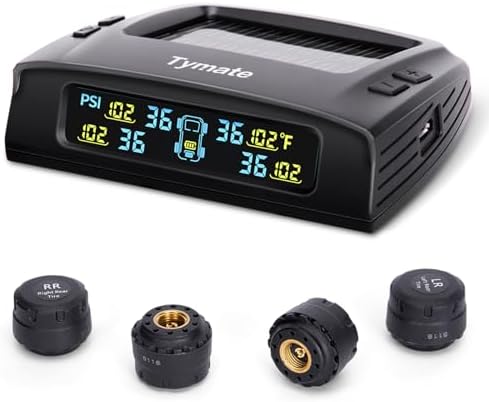
Some drivers do not want a project. They want to screw four small sensors onto the valve stems and plug in a monitor and be done. That is the appeal of the Tymate TM7. The sensors arrive factory paired to the monitor. The listing positions it for sedans and SUVs and trucks and RVs. The monitor uses a color LCD that shows pressure and temperature for each tire.
The alarm list is where it earns its keep for everyday use. The set includes high pressure and low pressure warnings. It also includes fast leakage and high temperature alerts. The last two cover a weak sensor battery and a lost sensor signal. The fast leakage alert is the one worth thinking about. If a nail or a damaged tire starts losing air quickly you get a signal that something changed. What you do next depends on the situation. A small puncture may be a job for a kit like the ones covered in Tire Repair Kits: 5 Options for Flat Tires. A bigger problem means a call for help.
One detail deserves attention before installation. According to the maker the system sets its alarm range from the pressure it sees when each sensor goes on. That pressure becomes the reference point. So the tires should be at the correct pressure first. Putting sensors on underinflated tires would build the wrong baseline into every alert.
The tradeoffs are simple. It monitors four tires. It plugs into a power outlet in the vehicle. The maker recommends a separate repeater for trailers over 36 ft. That makes it a strong fit for a commuter or a family SUV or a pickup that never tows. It is a weaker fit for a rig with many tires.
2. Tymate TM2 RV Tire Pressure Monitoring System
- [Discover Five Alarm Modes and Simple Setup for Alarm Thresholds]: With the Tymate Tire Pressure Monitoring System TM2, …
- [Efficient Power Usage and Precise Data Reading Sensors]: The Tymate TM2 tpms sensors set of 4 boasts four advanced exte…
- [Versatile Charging Options]: The Tymate Tire Pressure Monitoring System TM2 features solar automatic charging capabilit…
Think of the TM2 as the answer to a question the TM7 never asks. What if you have more than four tires to watch? The listing describes a set of four sensors with room to grow to ten tires. That matters for a truck with a utility trailer or a camper or any setup where a spare is worth watching. A basic car focused solution stops at four. The TM2 treats four as a starting point.
It also changes how the monitor gets power. The display charges from a solar panel and can charge through USB as well. In normal use there is no cable running to an outlet. Drivers who need that outlet for a phone or a dash camera will appreciate the difference. The monitor has a color LCD with automatic backlight adjustment. That helps readability at night and in bright light.
The listing names RVs and trailers and trucks and SUVs as intended uses. It also describes six alarm modes. They include fast leak detection and high and low pressure alerts and high temperature warnings. For a driver who tows now or might tow later that range of coverage is the real selling point.
There are limits to keep in mind. Any tire beyond the first four needs an added sensor. Solar charging works best when the monitor sits where light can reach it and USB is the backup when it does not. And a driver with one car and no trailer may never use the extra capacity. In that case a simpler system like the TM7 is easier to justify.
3. Masoll M13 Tire Pressure Monitoring System

- 【Wide Application】The Masoll M13 Tyre Pressure Monitoring System commonly used on the vehicles with 4 tires include but …
- 【Auto Set Alarm Value and Calibration】 Masoll Tire Pressure Monitor System is the most intelligent TPMS on the market. S…
- 【Solar Charging and Auto Wake-up/Sleep】 M13 Tire Pressure Monitor use a high energy efficient solar panel which makes co…
The Masoll M13 is about balance. It does not try to cover a big rig. It also does not ask the driver to do much. The listing highlights auto calibration and the manual explains what that means in practice. The system adjusts its reference pressure when you inflate or deflate. That helps a driver who changes pressure for a heavy load or a long trip and does not want to reset alarm values by hand.
Daily convenience seems to be the design goal. The monitor charges by solar. It has an automatic backlight. The listing also describes an intelligent sleep and wake function so the screen is not demanding attention when the vehicle is parked. Those are small touches. They add up for someone who wants a monitor to fade into the background until it has something to say.
The manual describes alerts for high pressure and low pressure and high temperature and fast leakage and a low sensor battery. Coverage is built for vehicles with four tires. That includes sedans and SUVs and pickup trucks and RVs. The manual also mentions travel trailers under 38 ft.
This one makes sense for the owner of a pickup or an SUV who mostly drives one vehicle. Compared with the TM7 it frees up the outlet. Compared with the i10 it asks for far less setup and does far less. The main limit is capacity. If you later add a trailer with extra tires you will outgrow a four tire system.
4. TireMinder i10 RV TPMS

- Large 3.15″ Color LCD featuring simultaneous PSI or Temperature Readings
- Checks for the following tire issues every 6 seconds: slow leaks, rapid leaks, blowouts, low pressure, high pressure and…
- Monitors up to 40 tires, from 0-199 psi, with +/- 1 PSI accuracy
The TireMinder i10 is for drivers who need more than a basic warning. It is built around the idea that a rig is really two vehicles. The monitor can track up to 20 tires and can switch between up to four vehicles. It shows up to 10 tires at once. The listing describes hands free swapping between a towing vehicle and a towed one. For someone who parks a trailer and drives the truck alone that matters. The display follows the rig.
The kit includes four transmitters and a TireMinder Rhino signal booster. The listing describes the booster as the part that supports signal reliability over distance. The maker says the i10 suits RV and trailer setups under 100 feet and under 20 tires. The system keeps watching while the vehicle is moving and while it sits still.
Setup takes more effort than the simpler cap and monitor systems here. The booster has to be connected to a 12 volt or 24 volt power source. The transmitters use valve cap style sensors that need small batteries. None of that is hard. It is just more than a sedan owner needs.
So who should consider it? Owners of larger RVs or anyone who tows a trailer and wants one display for the whole rig. It is overbuilt for a commuter car. If you only have four tires to watch a simpler monitor will do the job with less hassle.
5. Tymate TM3 RV Tire Pressure Monitoring System

- [Explore Five Alarm Modes and Effortless Setup for Alarm Thresholds]: The Tymate Tire Pressure Monitoring System TM3 fea…
- [Efficient Power Usage and Accurate Data-Reading Sensors]: The Tymate Tire Pressure Monitoring System TM3 features four …
- [Multiple Charging Options]: The Tymate Tire Pressure Monitoring System TM3 includes solar automatic charging capabiliti…
The TM3 targets the driver whose truck and trailer live together. The listing describes a system that can monitor up to 10 tires. The display can be swapped between the front vehicle and the trailer. It also lists a repeater function. For a pickup with a camper or a utility trailer that combination covers the two problems that matter. You need to see more tires. You also need the signal to reach them.
Power is flexible. The monitor can charge by solar or by USB. The sensors are factory paired and labeled by wheel position. That makes setup easier than it sounds. The color display shows pressure and temperature. The system includes six alarm modes.
Trucks and loads are where this one fits best. A heavy bed or a trailer puts real stress on tires and tire choice matters just as much as monitoring. If you are weighing new rubber for a work truck or a family SUV our guide to Best All Terrain Tires for Trucks and SUVs: A Practical Buyer’s Guide is a good companion read. A monitor helps you watch tires. It does not make the wrong tires right.
Compared with the TM2 it is built more directly around towing. Compared with the i10 it keeps things lighter and leans on solar charging. Compared with the TM7 and M13 it is more than a four tire commuter needs. One responsible note applies here. Systems like this are best at showing gradual changes in pressure and temperature. They are not a guarantee against sudden tire failure.
Choosing Tire Pressure Monitoring Systems for Your Vehicle
Go back to the problem that started this guide. A tire loses a little pressure and nobody notices until the vehicle feels wrong. The right monitor is the one that makes that moment less likely for your driving. That depends on four things. The vehicle. The routine. The number of tires. And how much information you want while you drive.
If you drive a car or a family SUV and want a clear view of four tires then the TM7 or the M13 is the sensible place to start. The TM7 is the plug in choice. The M13 leans on solar charging and automatic calibration. If you have a truck and expect to add a trailer or extra tires then the TM2 or the TM3 gives you room to grow. The TM3 makes the most sense when towing is a regular part of your week. If you run a large RV or a long towing rig then the i10 is the one built for that scale. The extra setup is part of the deal.
Whatever you choose remember what it is. A tire pressure monitor is an information tool. It will not replace a gauge or a regular look at your tread and sidewalls. It also will not add air or patch a puncture. Pair it with a way to correct pressure and a plan for roadside trouble.
Tire Pressure Monitoring Systems work best when they match the way you actually drive. Pick the one that covers every tire you own and fits how you want to read it. Then check the numbers before every long trip and trust the trend over the single reading.